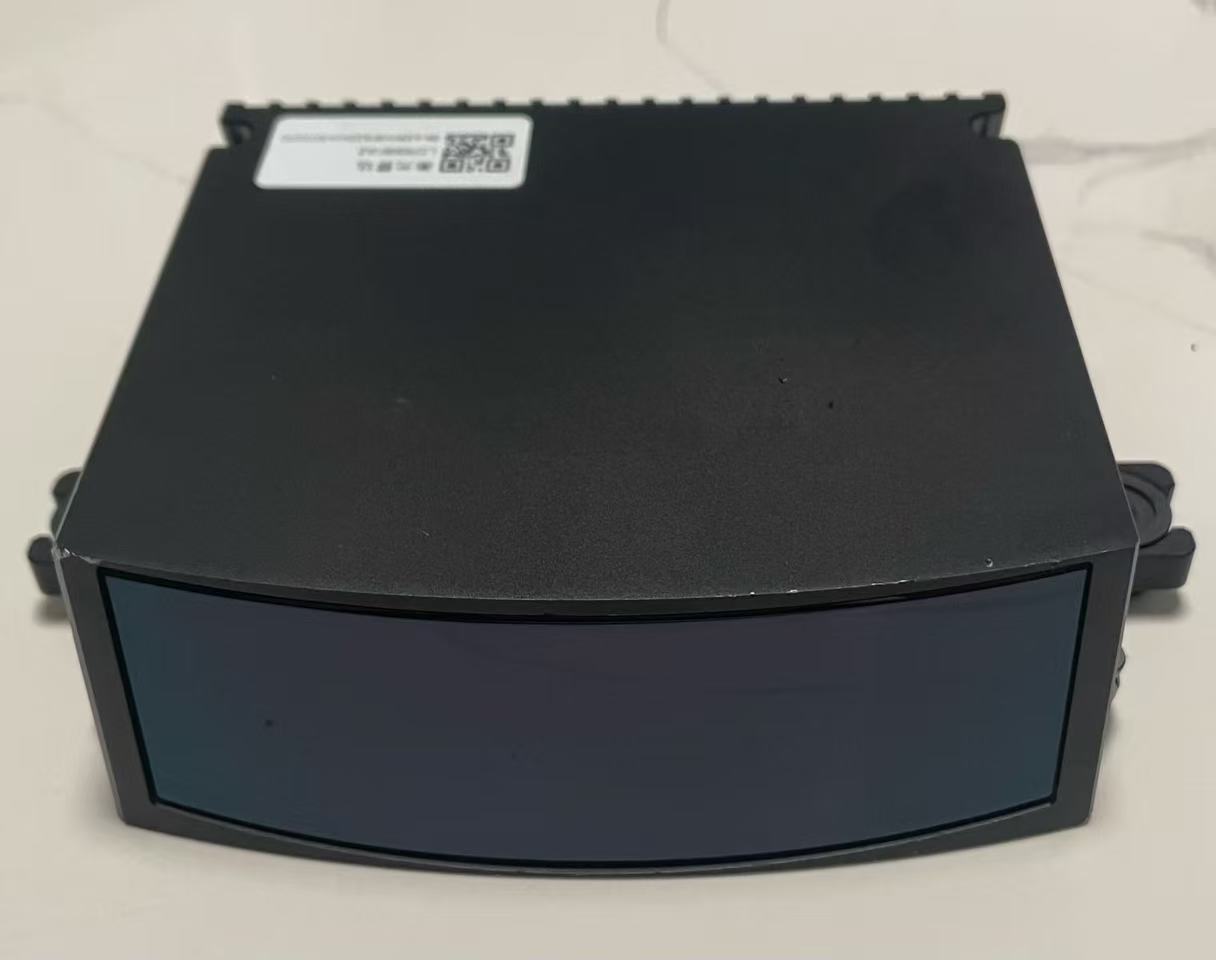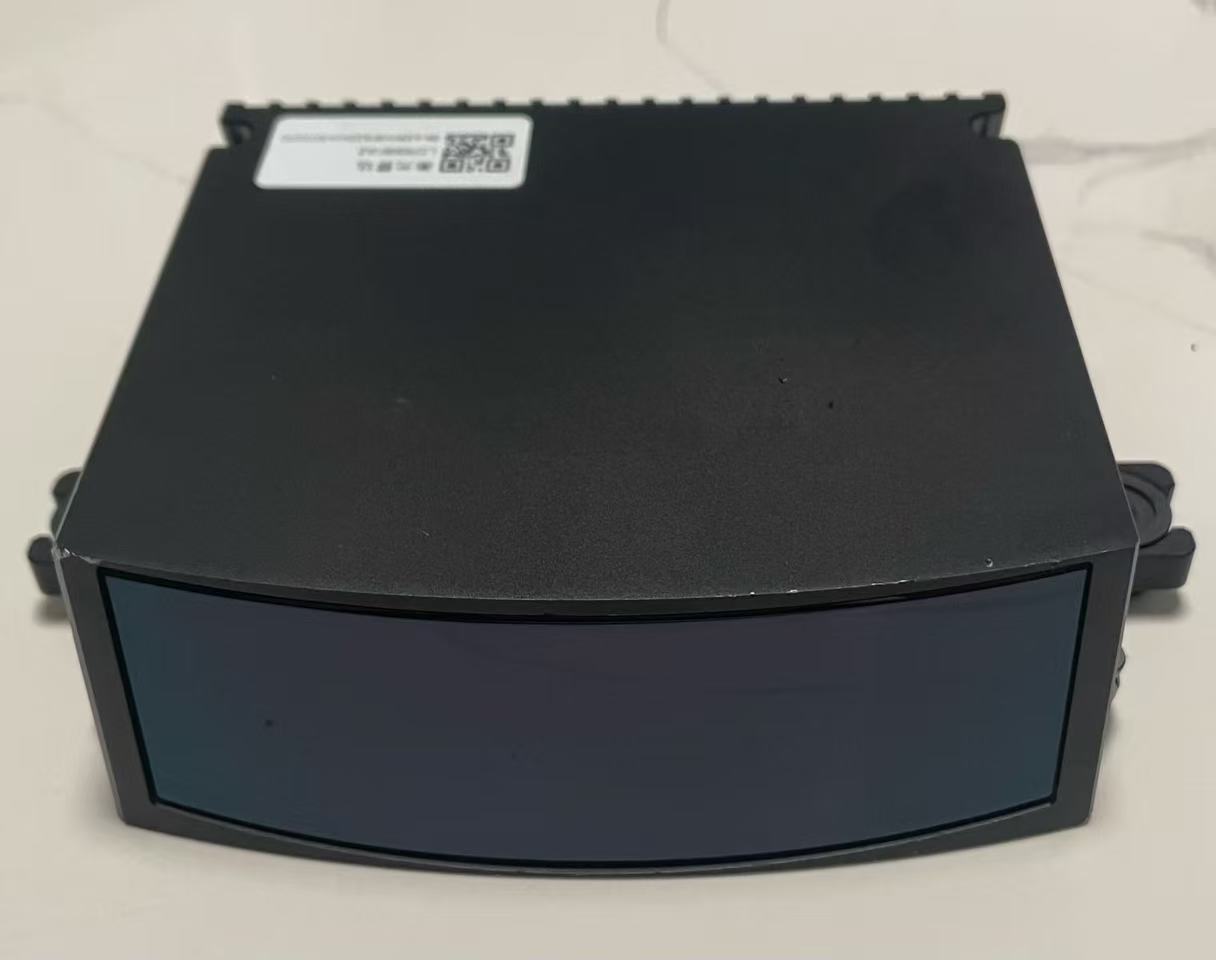
Long-range LiDAR used to force a hard trade-off: spinning mechanical units gave you 360° coverage but were fragile and expensive, while early solid-state units were rugged but short-sighted. Semi-solid-state, single-photon LiDAR is the architecture that finally splits the difference — and it's why a sensor like our LiDAR S1 can see 300 m while still surviving a decade on a vehicle roof.
What "semi-solid-state" actually means
A fully mechanical LiDAR spins its entire optical bench. A semi-solid-state design keeps the laser emitter and receiver fixed and moves only a small low-speed rotating mirror to sweep the beam horizontally. On the S1 that mirror turns at just 150 rpm to paint a 120° field of view. Fewer moving parts, lower rotational stress, and automotive-grade durability — without giving up a wide, dense scan.
Single-photon dToF: how you reach 300 metres
Range comes down to sensitivity. The S1 uses single-photon (SPAD) detectors with direct time-of-flight (dToF) measurement: fire an ultra-short laser pulse, time how long a reflected photon takes to return, and compute distance as d = c·t/2. Because a SPAD can register a single returning photon, the sensor still gets a usable echo off a 10% reflectivity target at 200 m — and out to 300 m on stronger returns. That extra reaction distance is exactly what highway-speed ADAS needs.
The specs that matter for integration
- Point density — 192 lines and 1,536,000 points/s at 0.15°×0.13° resolution give you enough cloud to classify small obstacles, not just detect blobs.
- Functional safety — an ASIL-B rating and Class 1B eye-safety let the sensor go into series-production safety cases, not just prototypes.
- Environment — −40~85 °C and IP67 / IP6K9K sealing mean it survives real outdoor and wash-down conditions.
- Time sync — 1588v2 PTP / 802.1AS gPTP support is what keeps a multi-sensor fusion stack coherent; without sub-microsecond timestamps your camera-LiDAR fusion drifts.
- Multi-echo & anti-interference — dual-return output helps in rain, dust and crowded multi-LiDAR scenes.
From box to point cloud
Power it with 9~32 V (just 10 W), set your host to the sensor's subnet, and data streams over Ethernet immediately. For development you get a C++/Python Driver SDK plus a ROS/ROS2 SDK — record and replay .pcap files, apply IMU motion compensation, and visualize live in rviz or the bundled viewer. That's the difference between "evaluating a sensor" and "shipping a product."
Where teams deploy it
The same sensor lands in automotive L2+/L3 ADAS, logistics and industrial AMRs, and construction machinery — anywhere you need reliable mapping, localization, recognition and obstacle avoidance at range.
Datasheet
PDF Download the LiDAR S1 product specification Get the technical datasheet, interface notes, SDK overview, and integration guidance. Download PDF →Evaluate S1 in your own system
If you want to move from reading specifications to real integration, Rogersense provides a LiDAR S1 development kit for teams that want to bring point-cloud data into their own ADAS, AMR, robotics, mapping, or industrial perception stack.
Engineering support Need SDK adaptation or a complete system? Talk with Rogersense about secondary development, gateway adaptation, timing configuration, navigation reference design, or a full machine-development project. Discuss your project →